Clear costs, flexible formats
Compare all four programs at a glance — schedule, clinicals, and tuition in one place.
| Program | Days & Hours | Clinicals | Tuition |
|---|---|---|---|
|
Part-Time CNA
Most Popular
Keep your day job while you train. Next start: Sep 14 · 10 seats.
|
Mon–Fri, 5:00–9:00 PM | Thu & Fri, 7:00 AM–3:00 PM | $600 $300 due before class starts |
|
Full-Time CNA
Fastest Path
An immersive weekday schedule. 10 seats per cohort.
|
Mon–Fri, 8:00 AM–4:00 PM | Thu & Fri, 7:00 AM–3:00 PM | $600 $300 due before class starts |
|
Zoom Weekend CNA
Remote Friendly
Live online lectures, skills check Tue/Wed. 10 seats per cohort.
|
Sat–Sun (online) + Tue/Wed skills check | Thu & Fri, 7:00 AM–3:00 PM | $600 $300 due before class starts |
|
CPR Certification
Add-On
Open to the public, no CNA enrollment required. 20 seats/session.
|
1st & 3rd Saturday, one-day course | — | $75 |
A $300 deposit is due before the first day of class and is non-refundable; the remaining balance is due before the first clinical day. Rescheduling is handled case by case. CPR retake fee (skills or final exam): $65. CNA skills refresher course: $150. CNA program retake fee: $600.
Three steps to your seat in class
Complete online enrollment
Fill out your enrollment packet from any device — no printing or dropping off paperwork required.
Submit your documents
Upload or print your TB test results and any required forms directly from your student portal.
Choose your payment plan
Pay in full or set up a plan that works for your budget — then you're confirmed for class.
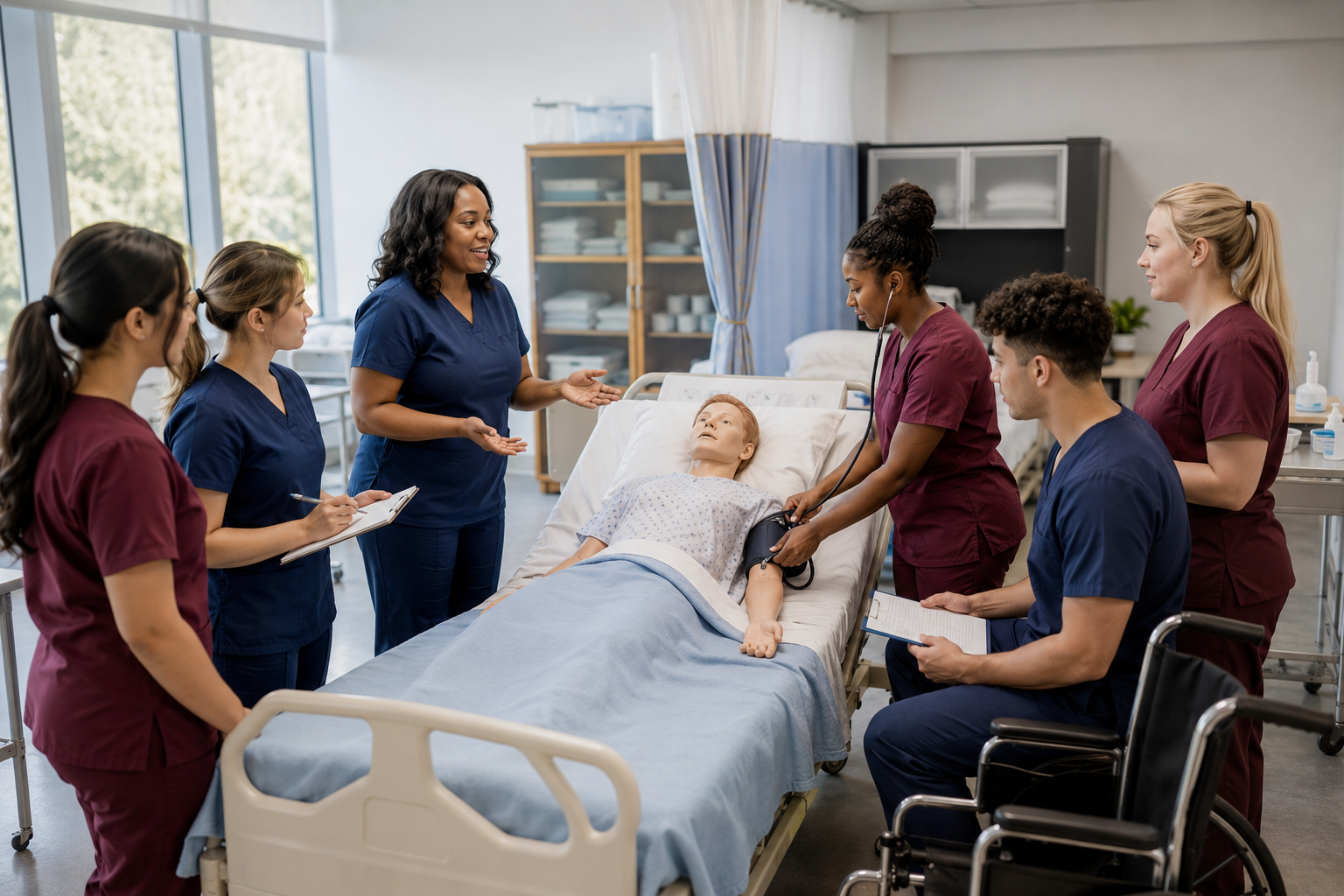
CPR certification doesn't require CNA enrollment.
Join a one-day, hands-on CPR class held every 1st and 3rd Saturday of the month. Perfect for caregivers, parents, and anyone in a nursing track.
Reserve a CPR SeatGood to know before you enroll
Do I need any experience to enroll?
No prior healthcare experience is required. You just need to be 18 or older and ready to complete clinical hours.
What happens after I finish the program?
You'll be eligible to sit for your state certification exam, then can work in nursing homes, home care, or hospitals as a CNA.
Can I take CPR without enrolling in the CNA program?
Yes — CPR certification is offered as a stand-alone one-day course, separate from the CNA program.
What if a class doesn't have enough students?
Class minimums help us keep quality high. If a cohort doesn't fill, you'll be moved to the next available start date at no extra cost.